Wednesday, August 24, 2016

Disability Insurance What You Need to Know

Disability Insurance


Disability Insurance or sometimes called DI, disability income insurance, or Disability Income protects the insurers earned income against the risk of disability. It would pay a portion of your salary, creating a safety in case of illness, disability or accidents that render the individual unable to work.

For instance an employee may suffer from an inability to maintain composure in the case of psychological disorders or an injury, illness or condition that causes physical impairment or incapacity to work. It encompasses paid sick leave, short-term disability benefits (STD), and long-term disability benefits (LTD). If you suddenly become ill or disabled the Disability Insurance can help you pay your bills, make your monthly rent or mortgage loan payments, buy your groceries, make your car payments, pay for your children's education, etc.

According to Council of Disability Awareness the average length of a long-term disability claim is three years. So, what you need to do is to target above three years to give you more protection.

Yes, workers compensation is a Disability Insurance, however it's only for  work-related disabling illness, and it only covers about 2/3 of your pre-disability income. Most long-term disabilities doesn't come from work-related illness or injuries it comes from cancer, heart disease, and other illnesses.

Having a disability insurance is really important since no one knows what happens in the future. Protecting part of your income would be better than having no protection at all.

If you want to protect your future and get additional Disability Insurance you can get quotes from these online brokers:
DisabilityQuotes.com
Disability Insurance Resource Center
PolicyGenius


Investing Money in Your Retirement: The Secret Way that the Super Wealthy Use Life Insurance as a Tax Free Retirement Fund
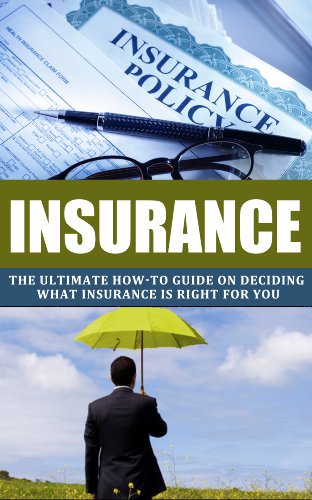


The Ultimate How-To Guide on Deciding What Insurance Is Right for You (Insurance, Insurance policies, AIG story, Risk Management, Coverage, Life insurance, Book 1)


Best Practical Guide for Risk Management, Property, Liability , Life and Health with Concepts and Coverage

Monday, August 22, 2016

Sunday, August 21, 2016

Will The New Ontario Fleet Definition Work?

As I reported previously, the Ontario government amended the fleet definition in Regulation 664 in early July.  The amended definition reads as follows:

“fleet” means a group of not fewer than five automobiles that meets the following requirements:
1. At least five of the automobiles in the group are commercial vehicles, public vehicles or vehicles used for business purposes.
2. The automobiles in the group are,
i. under common ownership or management, and any automobiles in the group that are subject to a lease agreement for a period in excess of 30 days are leased to the same insured person, or
ii. available for hire through a common online-enabled application or system for the pre-arrangement of transportation, and insured under a contract of automobile insurance in which the automobile owner or lessee, as the case may be, has coverage as an insured named in the contract

From my perspective, this is not an ideal resolution. However, it does fill in the insurance gap that has existed since Uber began providing its services in Toronto in 2012. One of the most important elements in the fleet definition has always been the requirement that there be common management. Common management is an element that is required in order for a group of vehicles to be considered a fleet, if they are not commonly owned or where they are owned by a leasing company. It refers to the fact that the owner or manager has a measure of control over the vehicles. A fleet is typically a discrete risk exposure whose experience and characteristics can be monitored and rated, and is affected by the actions of the owner or manager. The vehicles in a fleet are not individually rated as this is inconsistent with a key principle in fleet rating to establish a rate specific to the experience of the fleet. Usually, the manager of a fleet will implement rigorous risk management programs to monitor and improve experience and rating.

None of these circumstance remotely exist when it comes to Uber drivers and their vehicles. They are network of drivers connected to customers through an app provided by Uber. Their is no common ownership or management. It suggest that once an Uber driver turns on the app on his phone, he or she becomes part of a fleet. That decision isn't even made by Uber.

Is this such a bad thing? It could be if it leads to further erosion of the fleet definition. The regulator has for years denied fleet policies because they failed to meet the test of common ownership or management. Will they be able to continue to push back against synthetic fleets? It would have been better, if the government had created a provision in the Insurance Act to deal specifically with transportation network companies. I expect it will take some time to determine whether the government and the insurance industry will regret the newly amended fleet definition.

Tuesday, August 16, 2016

Aetna Backs out on Obamacare Health Insurance Plans in 2017


Aetna Obamacare, Obamacare fail, Obamacare costing billions


Like a sinking ship, health insurer are jumping out of the Obamacare titanic. Aetna Inc, 3rd biggest health insurer in the U.S., announced Monday that because of continuous financial losses on Obamacare plans, they will limit their market on individual insurance on the government-run online marketplaces in only (4) four states next year, instead of their current 15 states. This is the latest blow to Obamacare. The will stop offering policies on the exchanges in 11 states. They will keep selling Obamacare products in Delaware, Iowa, Nebraska and Virginia.
Aetna Obamacare, Obamacare fail, Obamacare costing billions
Aetna said that they lost $430 million in its individual policies unit since the exchanges opened in January 2014. They had 838,000 exchange customers at the end of June and they complained that those policyholders are mostly sick and costly to maintain. They criticized the federal program that should have mitigate those risks.

"Providing affordable, high-quality health care options to consumers is not possible without a balanced risk pool," said Aetna CEO Mark Bertolini.

Aetna will still offer individual policies outside of the Obamacare exchanges in the vast majority of markets where it now does business. However, those Off-exchange products are not qualified for federal subsidies.

Like Aetna, most insurers complains about the loses they incur because of Obamacare exchanges. They said  premiums were too low and it can't cover the cost of care because their consumers are far sicker than anticipated.

UnitedHealthcare (UNH), the largest insurer in the U.S. is expecting to lose about $1 billion on Obamacare policies in 2015 and 2016, they will also pull out most Obamacare exchanges in 2017. Humana (HUM) announced last month that it was withdrawing nearly 1,200 counties in 8 states in 2017. Afterward, it will only be selling insurance on the exchanges in 156 counties in 11 states. Others, including several Blue Cross Blue Shield companies, are also scaling back.


Tuesday, August 9, 2016

Consumers should be wary of short-term health plans


Consumers looking for health insurance outside of the annual open enrollment period should be wary of short term health plans. These plans may be marketed as alternatives to Affordable Care Act (ACA) health insurance, but they could leave you without adequate coverage and facing financial penalties at tax time. 

Originally, short-term health plans were sold as a stop-gap measure until you could get real major medical coverage. After the ACA kicked in, people had many other options for coverage, but these limited plans were still being marketed to consumers as a viable alternative. However, short-term  plans do not count as 'minimum essential coverage' under the ACA - meaning you'll have to pay a tax penalty. They also do not cover the 10 essential health benefits, can limit your annual benefits to $100,000 or less, and deny you coverage for any pre-existing conditions. 

These policies are sold year-round, unlike ACA-plans that must be purchased during the annual open enrollment period, unless you qualify for a special enrollment. Some states allow for coverage to last up to a year and policies can be renewed. This effectively takes people out of the insurance pool that the ACA was designed to expand, leading to increased costs for everyone. 

In an effort to bring the limited short-term health plans back to their original purpose and to protect consumers, the federal government is proposing a regulation to limit the duration of these policies to three months and increase consumer awareness of their limitations.

Insurance Commissioner Kreidler agrees with this effort and sent a letter yesterday in support of the new regulation.

Friday, August 5, 2016

Learn more about Medicare at free event Aug. 6 in Kent

Are you new to Medicare? The Office of the Insurance Commissioner’s Statewide Health Insurance Benefits Advisors (SHIBA) will be at the Kent Senior Activity Center from 10 a.m. to 2 p.m. on Saturday, Aug. 6

You will learn about:
  • Medicare parts A, B, C and D
  • Your Medicare benefits and options
  • How to get help paying for Medicare if you qualify
Find registration and parking information for this event.

Other resources:
Do you have Medicare questions? Call 1-800-562-6900.

Tuesday, August 2, 2016

Top 20 Insurance Brokers in the U.S.

insurance Brokers US, US insurance brokers, top insurance brokers in the US

The Business Insurance magazine have listed the top 100 brokers in the country they are ranked based on the 2015 brokerage revenue generated by U.S.-based clients.

There are four Western New York brokers that made the list First Niagara Risk Management Inc. – now owned by KeyCorp (NYSE: KEY) based in Buffalo  got the number 54 spot with $65.3 million. Lawley a privately-held insurance broker is at number 57 with $62 million. Meanwhile, M&T Insurance Agency Inc. dropped to number 79 from number 74 last year. Tompkins Insurance Agencies Inc., the sister company of Tompkins Bank of Castile in Batavia, were able to grow it secured the number 94 spot from 97 last year.

Here's the Top 20:

1 Marsh & McLennan Cos. Inc.1 $6,326,880,000 8.4%
2 Aon P.L.C. $6,052,059,000 4.1%
3 Willis Towers Watson P.L.C.1,2 $3,980,760,000 129.7%
4 Arthur J. Gallagher & Co.1 $2,713,336,000 13.0%
5 BB&T Insurance Holdings Inc.1 $1,676,025,000 (2.2%)
6 Brown & Brown Inc.1 $1,656,951,014 5.7%
7 Wells Fargo Insurance Services USA Inc. $1,316,335,000 1.3%
8 Hub International Ltd.1 $1,146,972,060 26.4%
9 USI Insurance Services L.L.C.1 $1,027,846,835 12.6%
10 Lockton Cos. L.L.C.1,3 $996,426,750 6.5%**
11 NFP Corp.4 $880,611,794 10.6%
12 Alliant Insurance Services Inc.1 $826,567,635 33.5%
13 AssuredPartners Inc.1 $555,938,953 23.8%
14 Acrisure L.L.C.1 $410,654,072 114.7%
15 BroadStreet Partners Inc. $336,550,000 36.6%
16 Jardine Lloyd Thompson Group P.L.C.5 $261,469,584 11.2%**
17 Integro Group Holdings L.P.1 $221,395,200 30.3%
18 CBIZ Benefits & Insurance Services Inc.1 $220,400,000 6.9%
19 Leavitt Group Enterprises1 $216,058,000 (2.9%)
20 Edgewood Partners Insurance Center, dba EPIC Insurance Brokers & Consultants $195,558,100 28.9%

The full list can be accessed on businessinsurance.com, however subscription may be required.